Segla Gear Narwhal and Ikigai Paddles
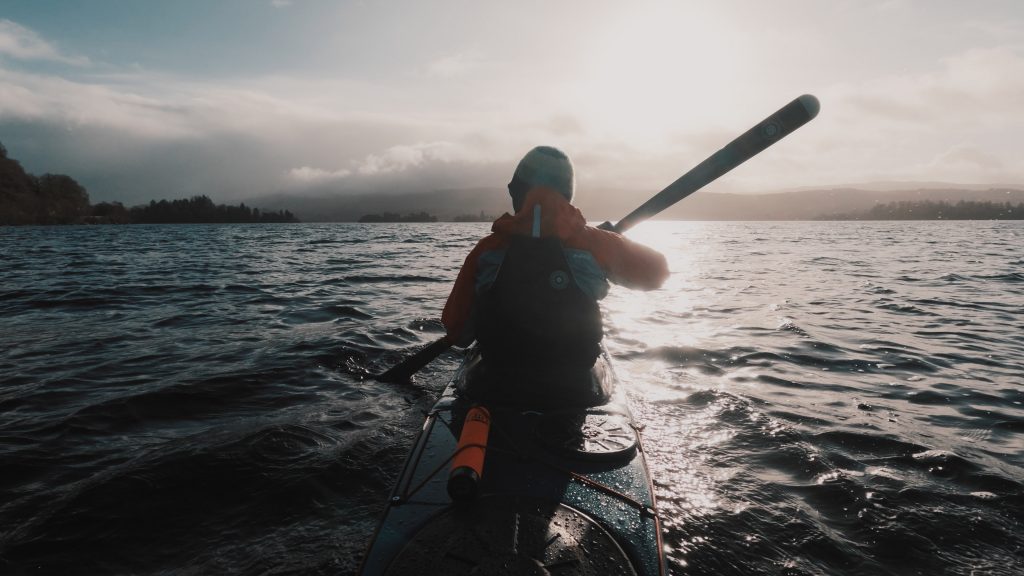
I really love Greenland paddles, having originally started using them around two years ago, following a wrist injury which made paddling with my previous straight shaft “Euro” paddles too painful. I bought several different ones initially, starting with a Kajaksport Inuksuk, which I bought primarily because of its adjustable length, as I had no idea what length would suit me personally, since Greenland paddle length is chosen according to different considerations to Euro paddle length. Once I found what worked for me, I tried a few others and worked on developing my Greenland forward stroke, and eventually found myself doing the majority of my paddling with them.
I’ve been paddling with Segla Gear paddles for quite a while now, the Ikigai being the one I have paddled with the most since getting one in September 2024. At the time, I had been mainly paddling with a GearLab Kalleq, which is a very popular and well known carbon construction Greenland paddle, but I had tried out an Ikigai that belonged to a friend and really liked the feel of it.
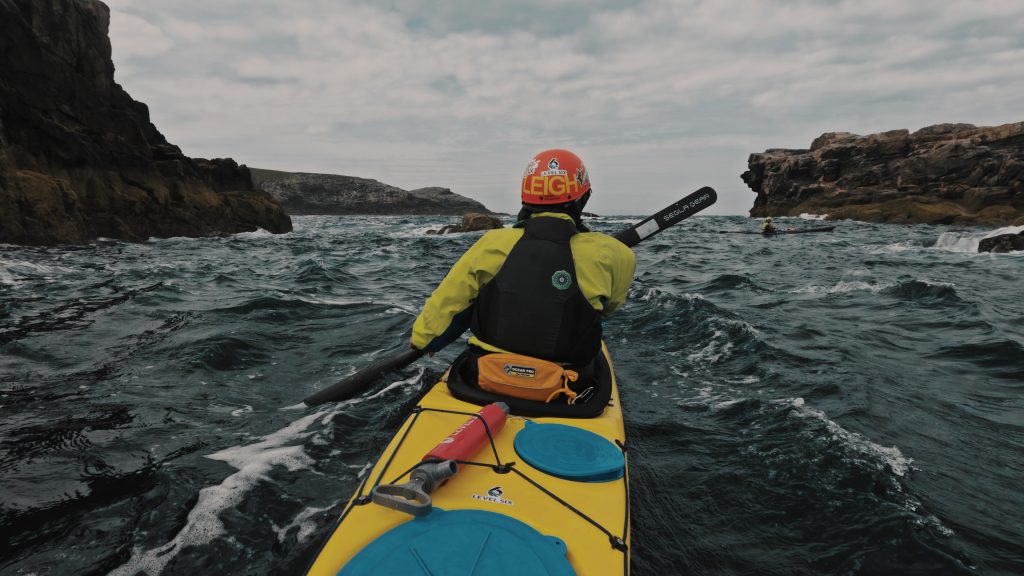
The Ikigai is extremely lightweight, which always suited me really well as I do a lot of long distance and multi day paddling. At about 675g, it’s around 75g lighter than my Kalleq, which isn’t a huge difference, but the paddle’s light weight is one of its most defining characteristics.
The blade tapers to a rounded edge which slices really easily into the water, making long days on the water with it feel very effortless. Despite its lightweight construction, it’s withstood a lot of abuse in rocky environments over the past year, and the tips have remained in good condition. Segla Gear does sell a removal silicone tip that you can place over the paddle for additional protection whilst paddling in particularly rocky environments.
Paddling with the Ikigai is an absolute joy, and while Greenland paddles do require some technique development to get the best from them, it is reasonably forgiving. As it is a shouldered paddle, the position where your hands should be is both visually obvious as well as easily felt. I’ve never developed a particularly strong preference towards shouldered or non-shouldered paddles, but I do like this aspect of shouldered paddles, that you don’t have to look down to know that your hands are in the right place on the loom.
I genuinely feel it’s one of the best paddles I’ve ever tried (and anyone who knows me knows I have a rather vast arsenal of paddles as I suffer from incurable curiosity, and have accumulated many over the years because I just had to know what they were like). It’s accompanied me all over the UK, from the south of England to Pembrokeshire in Wales to the very top of mainland Scotland, paddling in all conditions from calm lakes to rough surf launches, rock gardens and tide races, and until recently, it was my absolute favourite paddle.
What took its spot as my favourite? The Narwhal. Now this came as a surprise, as I didn’t expect to try a paddle and find I preferred it to the Ikigai, as the Ikigai just felt so perfect in my hands and on the water. I had paddled before with the Segla Gear Viper, which is very similar to the Narwhal, the difference being that the Viper is a full carbon paddle, whilst the Narwhal is made from aeroglass. This gives it a very different feel in the water; the Narwhal has very subtle flex that’s not present in the Viper, which makes it feel more like a wooden Greenland paddle. While, on the surface, this may seem a disadvantage to those who highly value performance, it means that the paddle has slightly less impact on your shoulders and wrist.
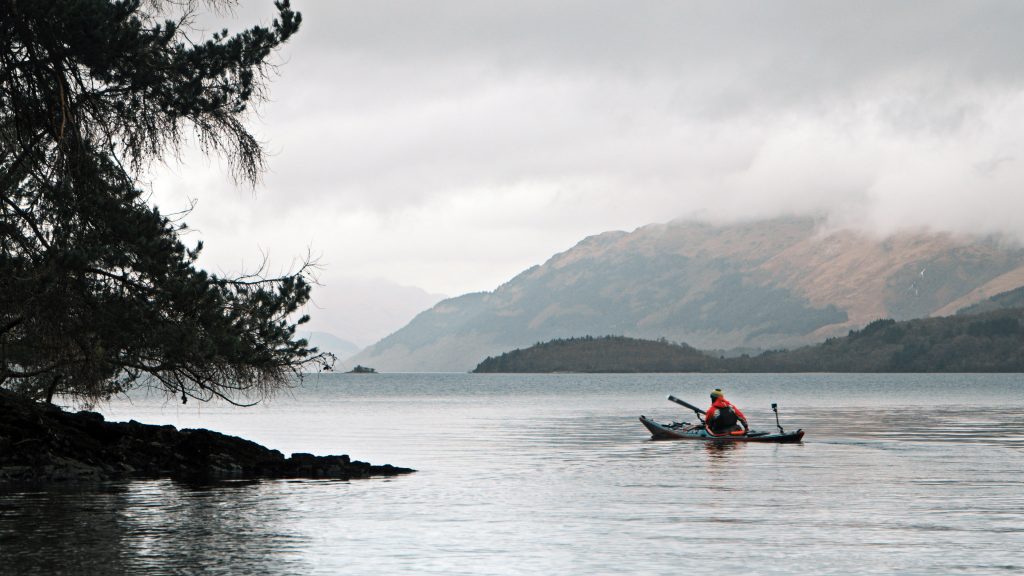
At 810g, the Narwhal is noticeably heavier than the Ikigai but still light enough to be considered lightweight, (810g isn’t very different to the weight of a carbon Euro paddle), however there’s a small advantage that comes with that weight, and that’s because the paddle buries itself quickly in the water on the initial catch phase of the stroke. This behaviour encourages a more efficient stroke, because with Greenland paddles, you get the best efficiency from placing as much of the blade as possible into the water.
I also feel that when using a traditional canted forward stroke, this weight also contributes to good grip technique, keeping the blade optimally positioned in your hand and entering the water at the correct angle. It’s very easy to achieve a perfectly smooth, perfectly silent catch with the Narwhal, and this means that you’ll experience no flutter with it as it slices through the water and out behind you; a Greenland paddle needs a firmly defined leading edge when placing it into the water, otherwise it’ll flutter throughout your stroke, but the weight and subsequent feel of this paddle seems to lend itself to being perfectly canted to avoid this.
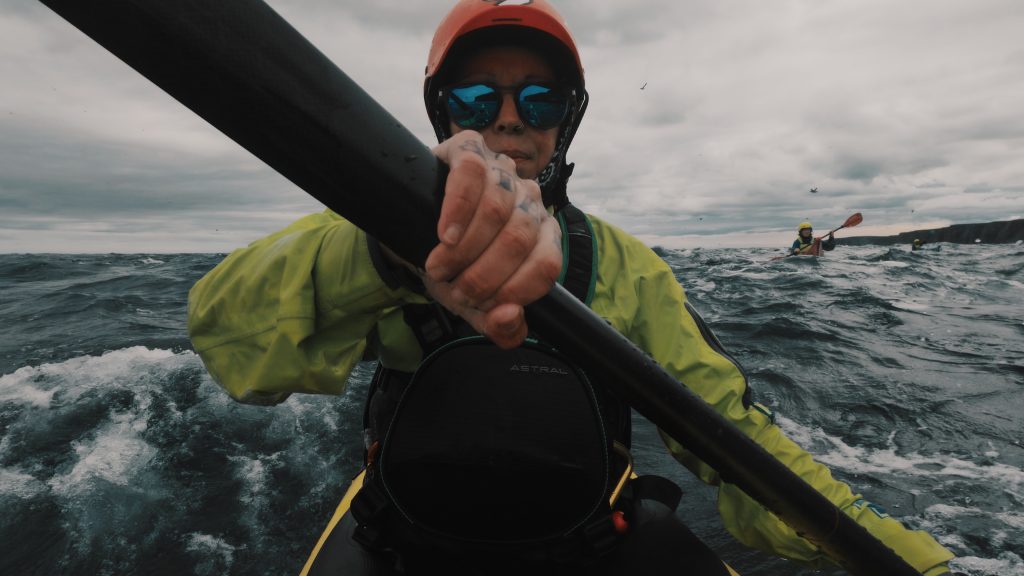
I don’t know enough about the intricacies and complex science of hydrology and paddle design, but I do know that these characteristics make the Narwhal a paddle that’s very easy to paddle “properly” with. As such, slightly moreso than the Ikigai, it’s a paddle that would work well as someone’s first Greenland paddle, whilst also being a piece of gear they could develop with and use longterm.
Being a non-shouldered paddle, you do get slightly less immediate feedback about whether or not your hands are spaced evenly apart, but this shouldn’t really be an issue. I placed a stripe of electrical tape on each side of my loom as a quick visual reference point for roughly where my hands should be, but really, I generally can feel when they’re correctly positioned anyway.
Some paddlers prefer a non-shouldered paddle as it makes sliding strokes a little easier; as mentioned earlier, I don’t have a strong preference either way, but I do really love the feel of this paddle’s loom in my hands.
I also like the replaceable plastic tips that the Narwhal has. They come in both a rounded, and squared off shape. These do slightly change the feel of the paddle as it enters the water; personally I prefer the rounded tips, but I like the squared tips too. These definitely extend the life of your paddle by preventing wear and tear to the ends, and as they come in a few different colours, they allow a measure of personal customisation to your paddle too.
So which one might be the best fit for you personally? Consider the following.
The Ikigai is a great choice if light weight and performance are your top criteria, as the full carbon construction means it weighs noticeably less and every ounce of effort you put into your stroke will be transferred into the water as the paddle does not flex at all. It might require some existing knowledge of Greenland technique to immediately benefit from it, as it’s not quite as forgiving as the Narwhal; you have to feel comfortable and confident with your canted stroke to avoid it fluttering or feeling inefficient in the water. The paddle has shoulders, which some paddlers have a preference for.
The Narwhal is a good option if you want the feel of a traditional wooden paddle in a glass construction that requires less maintenance and has a potentially longer lifespan. The slight flex of the blade places less strain on your shoulders and wrists, although it’s worth bearing in mind that good technique has a role to play in reducing strain too. The paddle’s weight lends itself to intuitively developing a silent and efficient stroke; this makes it a beginner-friendly paddle but also benefits experienced Greenland paddlers looking for a reliable paddle. The replaceable plastic tips provide additional durability and give the paddler confidence around rocky areas, as well as providing a level of customisation of both the look and the feel of the paddle as you can choose between a rounded or more squared tip. Some paddlers prefer the non-shouldered design that this paddle has.
If you want this shape paddle and replaceable tips in a more performance-oriented carbon construction, consider the Segla Gear Viper instead.
If you’re in the UK, Sea Kayak Academy is the distributor for Segla Gear.