Greenland Paddles vs. Euro Blades: Which is Right for You?
With kayaking, your paddle is just as important as your kayak. It has a significant contribution to your comfort on the water, your efficiency, and even how long you can paddle without fatigue. There’s an almost overwhelming array of options on the market.
Two of the most popular styles of paddle that sea kayakers use are the traditional Greenland paddle and variations of the modern Euro blade (so named as they’re actually a relatively modern European design). The Euro paddle is the one that most people will think of when thinking about kayaks. Both have their strengths, and the best choice really depends on the kind of paddling you do. You may also occasionally encounter paddlers on the water using wing paddles, which have their origin in racing. As these aren’t hugely popular, I won’t talk about them beyond this mention!
What is a Greenland Paddle?
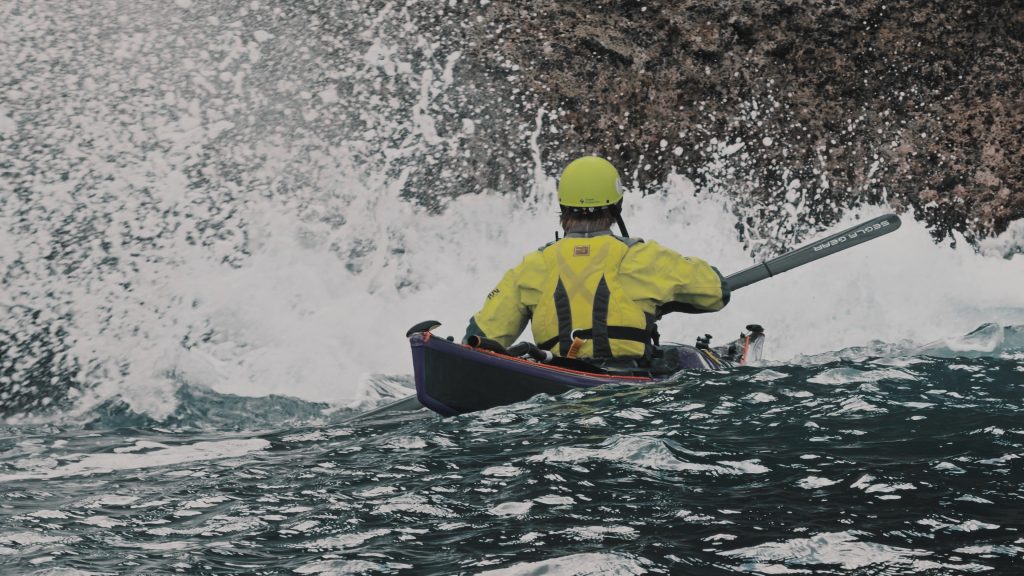
The Greenland paddle has been used for thousands of years by the Inuit peoples of Greenland, who developed it alongside kayaks for hunting in harsh Arctic seas. Its long, narrow design was perfectly suited for efficiency; hunters could travel great distances with minimal fatigue, move quietly through the water (they’re exceptionally quiet in use), and roll their skin-on-frame kayaks back upright if capsized.
Each paddle was traditionally carved from driftwood that washed ashore, carefully shaped to the paddler’s body dimensions for a very custom fit, although modern mass-produced paddles come in a more limited range of sizes (although there are one or two length-adjustable ones on the market, like the Kajaksport Inuksuk).
The design really lends itself to a gentle, flowing stroke; the paddle is usually held with half of the fingers on the blade itself, and the other half on the “loom” in the middle, with the blade canted slightly forward in the hand. This technique does take a little while to learn if you’re used to paddling with a Euro paddle, and initially it can even feel like the paddle is pulling you over into a capsize. This feeling however will settle once you get used to it, I swear!
The blades slice quietly into the water and encourage a lower cadence, making it a great option for sustained paddling over many miles. Many paddlers also find that Greenland paddle feels easier on the wrists and shoulders, especially on longer expeditions. It’s worth mentioning that I originally started using Greenland paddles when a wrist injury made it too painful for me to paddle with my Euro paddles.
Many paddlers today choose to make their own wooden Greenland paddles, just as the Inuit have always done. This is a very cost effective way of getting a new paddle, although in my own personal experience, I’ve definitely noticed that carbon fibre paddles tend to have slightly better performance in the water. The wooden ones, however, do feel very nice in your hands, and if you have access to the tools and can source good quality wood (red cedar is traditionally considered the best option), then it may be worth making your own.
Popular manufacturers of Greenland paddles include Gear Lab, Segla Gear, Lars Gram, Eastpole Paddles and Valkyrie Craft.
What is a Euro Blade?
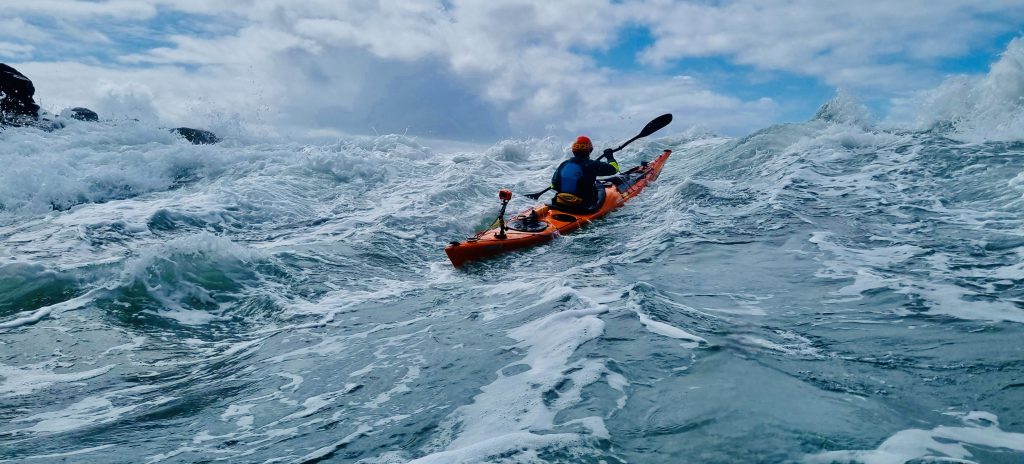
The Euro blade is the standard paddle you’ll see in most kayak shops today. With wide, spoon-shaped blades, often made from carbon fibre or fibreglass but also commonly plastic, it’s designed for power and responsiveness, and there’s a large variety of both blade sizes and shapes available.
The design of the European paddle emerged alongside the development of contemporary fibreglass and plastic kayaks in the mid-20th century. Inspired by canoe paddle shapes but adapted for the needs of sea and whitewater kayaking, Euro blades were designed with wide, spooned tips to generate strong power with each stroke.
As kayaking grew in popularity as both a sport and leisure activity, manufacturers refined the design with lightweight materials like carbon fibre and added options for feathered blades, bent shafts, and adjustable lengths. Today, the Euro blade dominates the kayaking world even though its design lineage is far younger than the centuries-old Greenland paddle.
This style suits paddlers who need bursts of speed, quick manoeuvres, or strong control in rough water. It’s also the paddle most beginners learn with, partly because it’s the mainstream choice and partly because its powerful catch feels intuitive at first use.
Popular manufacturers of Euro touring paddles are Werner, Celtic/Lendal, VE, Select and Segla Gear.
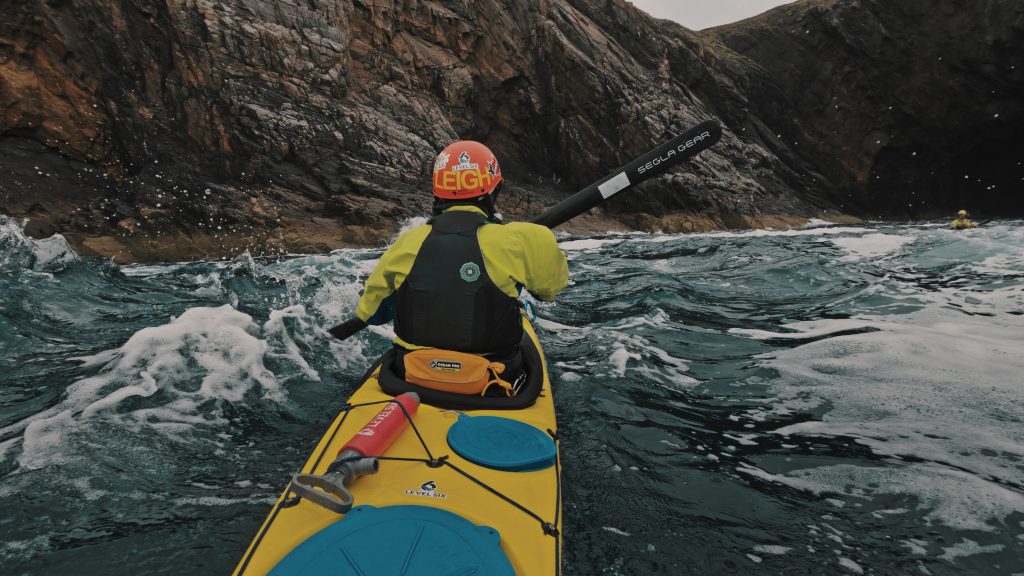
Which Paddle is Right for You?
At the end of the day, there’s no “perfect” paddle; Greenland paddles and Euro blades each have their own style, and both come with their own set of trade-offs. Which one feels right often comes down to personal preference, paddling goals, and even how your body likes to move on the water.
What feels effortless or amazing to one paddler might feel awkward to another, which is exactly why trying them out is so important. In the sections below, I’ll break down the specific pros and cons of each, so you can see which paddle might suit your own adventures best. Consider the following:
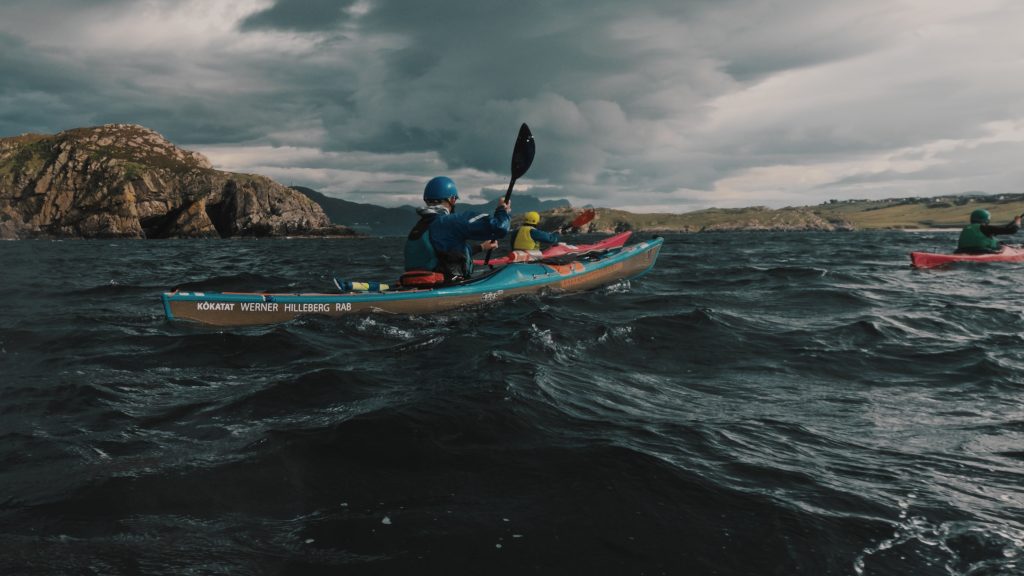
- If you’re drawn to multi-day expeditions or prefer a relaxed, rhythmical paddling style, a Greenland paddle may be worth considering. That’s not to say that there aren’t many, many people who continue to happily use Euro paddles for these types of trips, but because this type of paddling is where Greenland paddles really excel, they’re worth a try.
- If you love dynamic conditions, surfing, or need power at your fingertips, the Euro blade feels intuitive. If you’re only doing whitewater, it’s pretty much Euro paddle only.
- Many sea kayakers actually carry both: a Euro blade as their main paddle and a Greenland as a spare (or vice versa).
Ultimately, the best way to decide is to try both. Borrow one from a friend, join a club, or attend a skills session where different paddles are available. The right paddle is the one that feels natural and comfortable in your hands and supports the way you want to paddle.
Pros and Cons of Greenland Paddles
Smooth, low-impact strokes reduce strain on joints.
Excellent for long-distance touring and expeditions.
Superb for rolling (there are SO many kinds of Greenland-specific rolls).
Less immediate power in headwinds or surf.
Can feel unusual or “weak” to paddlers accustomed to Euro blades.
Requires specific technique that feels odd to many paddlers at first.
Pros and Cons of Euro Blades
Powerful strokes for acceleration and control.
Well-suited to surf, rock-hopping, and technical manoeuvres.
Widely available and familiar to most instructors.
Can lead to wrist and shoulder fatigue on extended journeys.
Less efficient over long distances if technique isn’t refined.
Depending on your physiology, you may require a bent/cranked shaft paddle, which can be quite expensive.
Final Musings
Greenland paddles and Euro blades both have long, respected histories, and neither is necessarily “better” than the other. They simply offer different experiences on the water.
By experimenting with both, you’ll find not just a paddle that suits your body, but also one that enhances your enjoyment of kayaking as a whole. Just as many paddlers will try many different kayaks before buying one of their own, it’s certainly worth the time to try lots of different paddles too. After all, your paddle is your primary interface with the water and has just as much an impact on your experience kayaking as your kayak does.
I often see people posting online asking for paddle recommendations, and generally the response is primarily just people recommending their own favourite paddle, but this doesn’t take into account the many variables that discern us from one another, from differences in anatomy to paddling style to goals. This is why trying lots of paddles out is so beneficial to making the right choice. Borrow from friends, or a club, or even a paddling shop that has demo models available (many do!).