Popular Areas for Wild Camping in the UK
As we know, wild camping in most of the UK presents some obstacles. In most places, it’s not technically legal without the landowner’s permission, yet in practice it’s quietly tolerated if done responsibly, especially in remote upland areas.
For many, part of the fun lies in finding a peaceful corner of the landscape, pitching late, leaving early, and leaving no trace that you were ever there. Always try to be one of these campers!
Here’s a brief overview of some of our more popular regions for wild camping.
Dartmoor
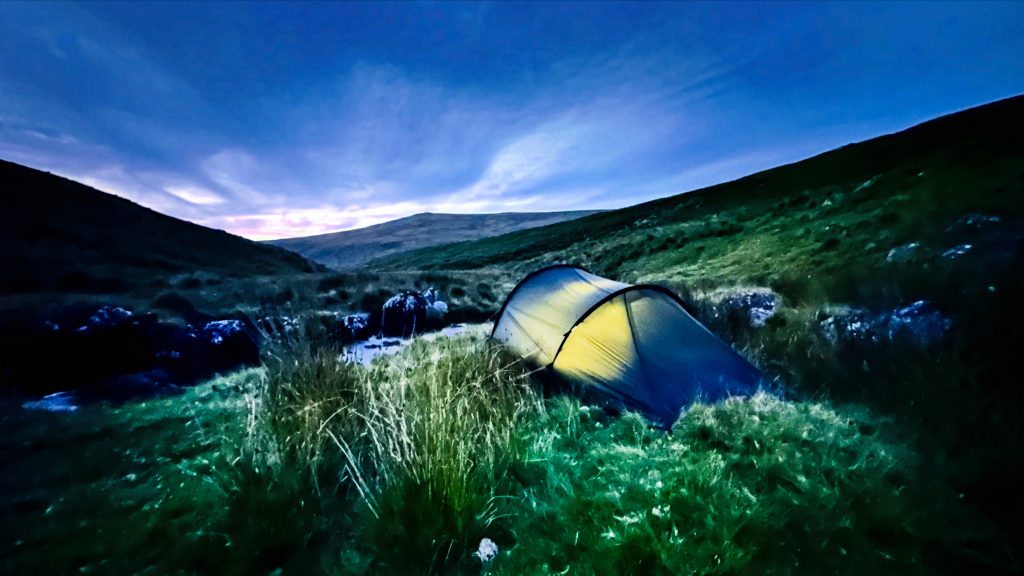
Dartmoor is the one place in England where you can legally wild camp, but only in specific areas. Following a 2023 court case, the right to “backpack camp” (ie not pitching a tent next to your car in a lay-by) was reaffirmed and mapped by the Dartmoor National Park Authority.
You’ll need to stick to the zones shown on their camping map, pitch a small tent for no more than two nights, and stay well away from roads and buildings. Be sure to check online for military firing times and zones too. Fires and BBQs aren’t allowed. Anywhere.
It’s a wonderful way to experience Dartmoor’s tors and windswept moorland. There are rivers and foresty bits too. It’s an odd, desolate place that you should definitely consider visiting at least once! Along with ponies and sheep, there are cows around the moors all year round, but they’re generally pretty chilled out. Be aware that the vast amounts of open moorland here are prone to windy conditions, so make sure you’re bringing a suitably strong tent if windy conditions are in the forecast, or consider dropping down to one of the more sheltered valleys.
The Lake District
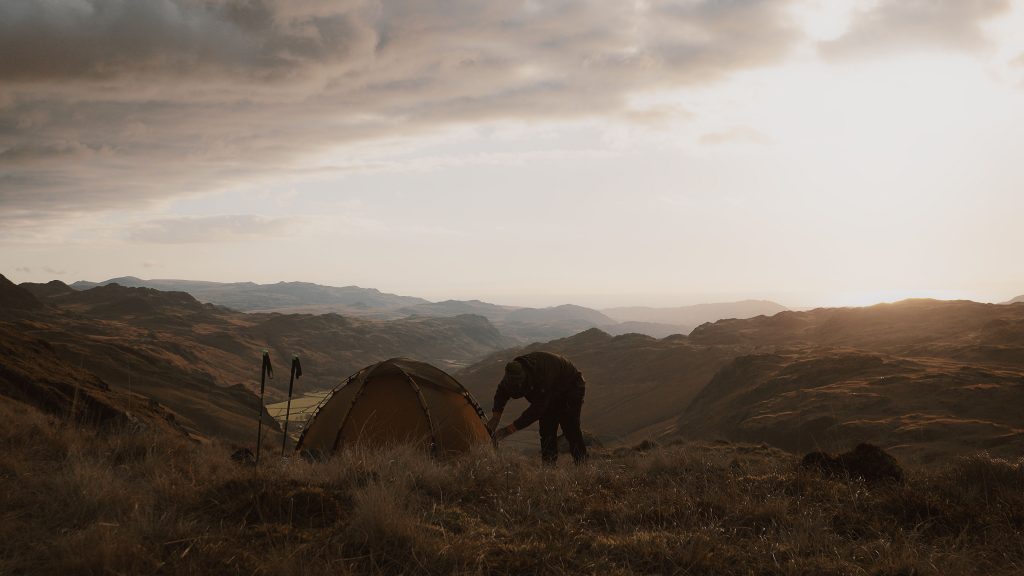
While not officially permitted, wild camping has long been tolerated throughout the Lake District National Park if you keep to the fells. The general rule is simple: camp above the highest fell wall (generally above 400m or so, these highest farm walls are generally pretty visible), and out of sight.
Arrive late, leave early, and avoid busy routes and tarns near popular summits. Be respectful and discreet and you’’ll likely encounter no issues. Wild camping is an excellent way to do multi day routes across the fells!
There have been a lot of problems in the past few years with fly camping around the Lake District. This has led to a public backlash and council action in certain particularly problematic areas; ones of these is the area around Wastwater, which is now patrolled. Don’t camp there. Also, please stop camping at Raven Crag above Thirlmere. It’s become totally overused and is now regularly strewn with litter and scorched logs. Give it a rest so it can recover.
Eryri (Snowdonia)
Eryri has some of the best mountain scenery in Wales, and indeed the UK, and although, once again, wild camping isn’t technically legal here, it’s often ignored in the higher, quieter ranges. The Carneddau, Moelwynion and Rhinogs are all good options for solitude. The Gylderau tends to be busier but during the winter months you can often find yourself alone, especially once you’re away from the usually-always-at-least-somewhat-busy Llyn Idwal area (where you shouldn’t be camping anyway, as it’s a nature reserve).
As elsewhere, camp above the last wall or fence, far from paths and farms, and take every trace home with you. Consider avoiding the main Snowdon area, where wild camping is heavily discouraged (and parking is really hard to come by anyway). As with any mountainous area, be sure to check mountain-specific forecasts before leaving, and come appropriately geared up.
A stone’s throw from Eryri, the “Mid Wales” area around the Berwyn Mountains is also generally a good bet for solitude in the hills.
Bannau Brycheiniog (Brecon Beacons)
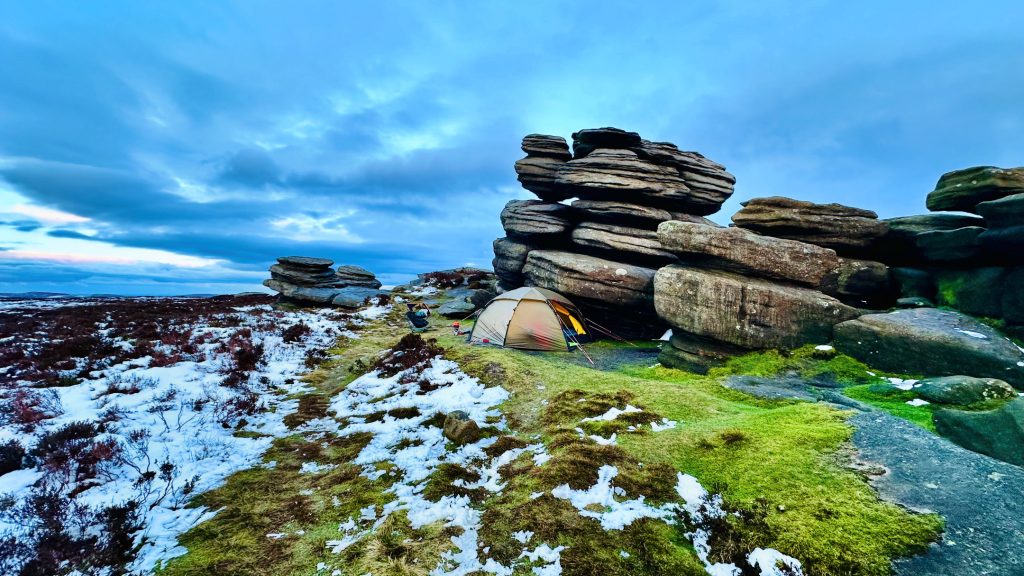
Again, it’s not formally allowed, but in the higher, remoter parts of areas like the Black Mountain, small discreet camps are broadly ignored.
Stick to the “high, late, and leave-no-trace” approach, respect and avoid livestock, and never light fires.
Peak District
The Peak District is a patchwork of private land, and wild camping is officially prohibited, and quite frowned upon in some places due to disrespectful behaviour in recent years. Hotspots like Bamford Edge, are regularly patrolled. And for the love of all that is holy, stop camping on Mam Tor or you’ll upset the Dryrobe-clad dog walkers.
That said, experienced backpackers do often camp quietly on the high moors well away from paths and settlements. If you do so, keep an extremely low profile and follow a strict leave no trace ethic. This includes a total prohibition on making fires; not only are fires generally not keeping with LNT principles, but the peaty ground here makes fires particularly dangerous. Just don’t do it.
And please don’t go make a mess in the Snake woodlands.
A certain well known YouTuber has contributed to wild camping in this area becoming extremely popular over the past few years, so you may struggle to find areas where you’re totally alone, especially in summer, and especially around Kinder Scout, Derwent Edge and other areas with open views. However, the less “glamorous” areas, like Bleaklow, still tend to be quieter. Although in the case of that area, it’s very much a place that lives up to its name and the hike in can be very boggy indeed.
The Cairngorms
In Scotland, things are thankfully simpler. The Land Reform (Scotland) Act 2003 gives everyone the right to wild camp responsibly under the Scottish Outdoor Access Code. You can pitch almost anywhere that isn’t enclosed or cultivated land, just stay well away from roads, buildings, and popular loch shores. Note that camping with a motorised road vehicle is specifically excluded from these provisions; you must be on foot, bike, or boat.
The Cairngorms’ vast plateaus and glens are ideal for multi day trips, but remember that weather can turn severe even in summer. Camp lightly and be prepared. Midges are a massive pain in the summer.

The Scottish Highlands
The rest of the Highlands follows the same open access rules. You can camp almost anywhere with care and consideration.
Avoid crofting land (sheep farms), gardens, and close proximity to houses, and be aware of deer stalking seasons in late summer and autumn, which is generally sign posted in relevant areas.
In Loch Lomond & The Trossachs National Park, there are Camping Management Zones that require permits between March and September, so check before you go. As with the Cairngorms, beware the evil midge in summer.
A Few Final Notes
Wherever you camp, the principles are the same: arrive late, leave early, and leave no trace. Keep groups small, use a camping stove instead of a fire, and pack out every scrap of litter. If a landowner asks you to move on, do so politely. Wild camping in the UK relies on trust and respect. Be a good steward of the land.